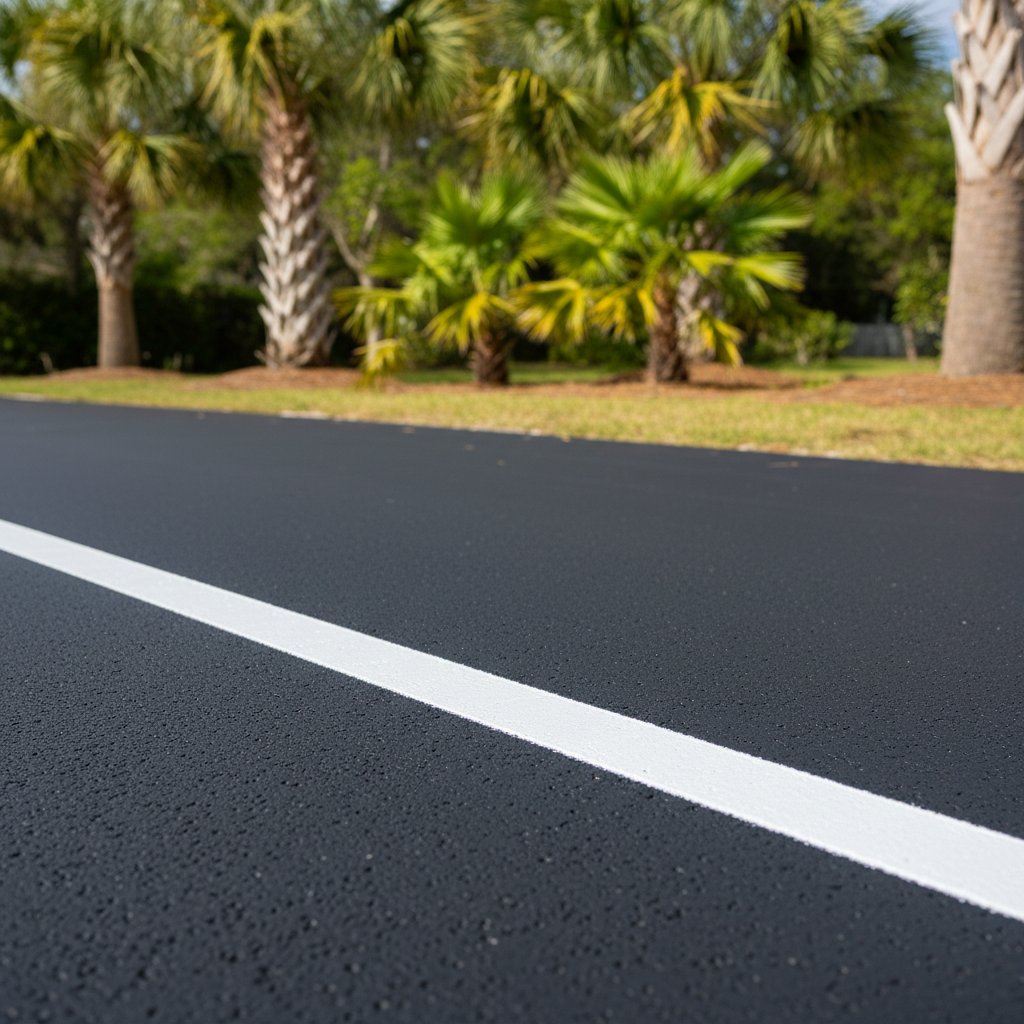
Do I really need asphalt striping for my home's private drive or shared community road?
Look, if you've got a long private driveway, a shared access road in a small HOA, or even just a big parking pad, striping isn't just for big commercial lots. It's about safety and organization. Think about it: clear lines tell visitors where to park, where not to block access, and how to navigate safely, especially if you've got kids playing or a lot of traffic. It helps prevent fender benders and makes your property look a lot more put-together. For HOAs, it's pretty much a given for keeping things orderly and avoiding neighbor disputes about parking spaces.
What kind of paint do you use for asphalt striping, and how long does it last?
This is a big one, and it's where some folks cut corners. We don't just grab any old paint. For asphalt, you need specialized traffic paint. It's designed to adhere to asphalt surfaces, resist fading from the intense Jacksonville sun, and stand up to vehicle traffic. There are different types: water-based, solvent-based, and even thermoplastic for heavy-duty applications, though that's usually overkill for residential. For most residential jobs, we're using a high-quality, durable water-based acrylic traffic paint. How long does it last? That depends on a few things: traffic volume, how well the surface was prepped, and the quality of the paint itself. Generally, you can expect good quality striping to last anywhere from 2 to 4 years before it starts looking faded and could use a refresh. If it's a rarely used drive, it might last longer. If it's a busy shared road, you'll see wear sooner.
How long does the striping process take, and when can I drive on it?
The actual striping process itself is usually pretty quick once the surface is prepped. For a typical residential driveway or a small community parking area, we're talking a few hours, maybe half a day. The biggest factor is drying time. Most traffic paints are designed to dry to a 'no pick-up' state fairly fast, often within 15-30 minutes, especially on a warm, sunny day like we get here in Jacksonville. But to be safe and ensure the best durability, I always recommend staying off the fresh lines for at least an hour, preferably two, to let them cure properly. We'll put up cones or tape to make sure nobody drives over it too soon. It's a small inconvenience for a much longer-lasting result.
Can you stripe over old, faded lines, or do they need to be removed first?
Most of the time, we can stripe right over existing faded lines. If the old lines are still somewhat visible, they serve as a good guide, and a fresh coat of paint makes them pop again. However, if the old lines are really caked on, flaking badly, or if you want to change the layout, then we might need to remove them first. Removing old paint can be done through grinding or sandblasting, but that's a more involved and costly process. For residential jobs, it's rarely necessary unless there's a significant design change. We'll assess it during the estimate and let you know what's best for your specific situation.
What's the typical cost for residential asphalt striping?
This is tough to give a one-size-fits-all answer because it varies a lot. It depends on the total linear footage of lines, the number of parking stalls, any custom stenciling (like