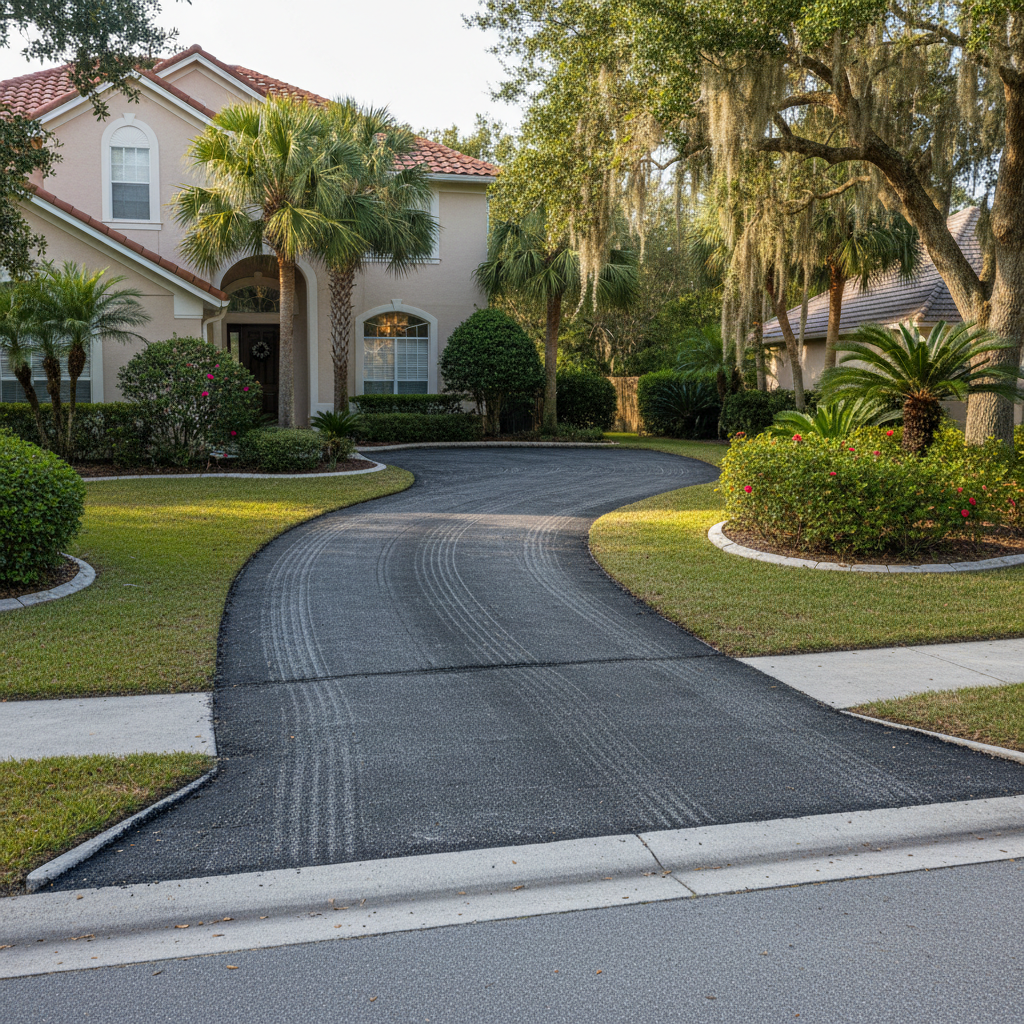
People often watch a crew scrape up an old highway and wonder if they can just throw those chunks down on their property for a cheap driveway. This is a common thought around Duval County, but Asphalt Milling projects are trickier than they look. If you do not plan Asphalt Milling right, you will end up with a messy, uneven surface that washes away during the heavy summer afternoon downpours in Jacksonville, FL. Many property owners try to cut corners with Asphalt Milling, only to regret it when their cars start tracking loose gravel into the garage or the whole surface turns into a swamp.
Before you sign any contract or dump a single load of recycled asphalt on your property in Jacksonville, FL, you need to watch out for a few specific issues during Asphalt Milling.
Skipping Proper Subgrade Preparation
The biggest mistake homeowners make is thinking millings can just be dumped right over bare sand or uncompacted dirt. Jacksonville has plenty of sandy soil that shifts and holds moisture, especially out near the beaches or spots with high water tables. If you do not grade and compact the subbase first, your new Asphalt Milling surface is going to sink, rut, and hold standing water the first time it rains hard.
You need a solid foundation underneath those millings. Do not let a contractor tell you they can skip the roller compaction phase during Asphalt Milling. Without a heavy drum roller locking everything together, loose millings are just gravel with a fancy name.
Ignoring Drainage in the Layout
Water has to go somewhere in Northeast Florida. When you lay down an Asphalt Milling surface, you are creating a semi-porous layer that handles water better than solid blacktop, but it still needs proper slope. Driveways off San Jose Boulevard graded completely flat result in massive puddles right by the front step because nobody bothered to pitch the surface toward the ditch or drainage swale.
- Always check the grade before the Asphalt Milling material goes down.
- Make sure water flows away from your foundation.
- Do not trust a contractor who does not use a transit or laser level for Asphalt Milling.
Buying Blind Without Inspecting the Material
Not all millings are created equal. Some Asphalt Milling batches come out fine and contain plenty of residual tar that helps the material bake together in the Florida sun. Other loads are dry, chunky, and full of dirt or base rock debris because they were scraped too deep into the subbase.
Always ask where the Asphalt Milling material is coming from. If a contractor is offering a price that sounds too good to be true, they are probably hauling garbage-grade millings that will not compact properly. Neighborly Asphalt Solutions always tells property owners to look at the load before it gets spread out across their property in Jacksonville, FL.
Take your time, complete Asphalt Milling right the first time, and you will not have to worry about your driveway washing out down the road.