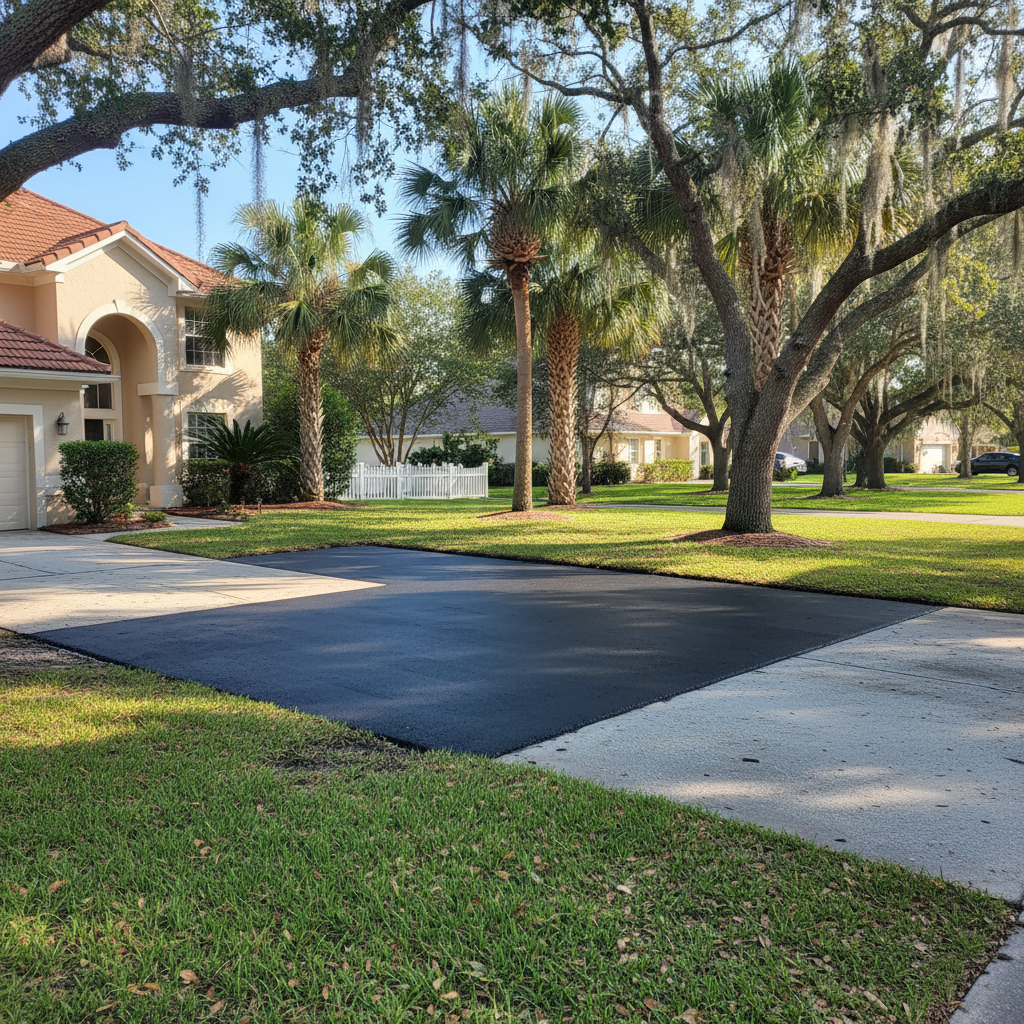
Got cracks in your driveway? Maybe some potholes are starting to pop up. You know they need fixing, but you're probably wondering, when's the best time to actually do it? Here in Jacksonville, it's not as simple as just picking a sunny day. Our climate — with its intense heat, humidity, and sudden downpours — really dictates when asphalt work will hold up best. It's a tricky balance.
Why Jacksonville's Weather Really Matters for Asphalt
Think about it: asphalt is a petroleum-based product. It's built to be flexible, sure, but extreme temperatures can really mess with that. When it's super hot, the asphalt gets softer. When it's cooler, it stiffens up. This constant expansion and contraction, especially with our wild temperature swings from a cool winter morning to a scorching afternoon, puts a ton of stress on your pavement.
Then there's the humidity. We're practically living in a sauna for half the year, aren't we? High humidity can affect how bonding agents and sealants cure. If it's too humid, or if rain is on the way, those materials might not set properly. And if they don't set right? Your repair won't last as long as it should. You're basically throwing money away if the conditions aren't right, honestly.
And let's not forget the rain. We get some serious afternoon thunderstorms, especially in the summer. You simply cannot lay asphalt or apply sealcoat on a wet surface. Period. Water prevents proper adhesion, and you'll just end up with a weak repair that fails quickly. Nobody wants that.
The Best Time to Schedule Asphalt Repairs in Jax
So, when's the sweet spot? For most asphalt repairs and sealcoating projects here in Jacksonville, I generally tell folks that late fall, winter, and early spring are your best bets. Why?
- Lower Temperatures: The cooler, drier air helps asphalt materials cure properly. It's not so hot that the asphalt is too soft to work with, and it's not so cold that it becomes brittle.
- Less Rain: While we can get cold fronts with rain, the consistent afternoon downpours of summer are much less frequent. This gives us longer, uninterrupted windows to get the work done right.
- Lower Humidity: Drier air means better adhesion for sealants and patching materials. They'll bond stronger and last longer.
Now, I know sometimes you just can't wait. If you've got a dangerous pothole, you need to get it fixed. We can handle emergency repairs any time of year, but for bigger jobs like sealcoating or extensive crack filling, aiming for those cooler, drier months is going to give you the best return on your investment. Trust me on this one.
What Weather Conditions Affect the Work?
When we're talking about specific conditions, here's what we're looking for:
- Temperature: Ideally, we want air and surface temperatures to be consistently above 50°F (10°C) and below 90°F (32°C). Too cold, and the asphalt won't compact properly. Too hot, and it can be difficult to work with and cure too fast, leading to issues.
- Dryness: The surface absolutely has to be dry. No standing water, no recent rain. Even dampness can compromise the bond.
- Wind: Strong winds can affect the application of sealcoats, causing uneven drying or blowing debris onto the fresh surface.
- Humidity: Lower humidity is always better for curing.
We're always checking the forecast, sometimes even hour by hour, because those pop-up thunderstorms can really mess with a day's schedule. You know how it is in Jacksonville; one minute it's sunny, the next it's a deluge.
Protecting Your Investment Year-Round
Getting your asphalt repaired at the right time is only half the battle. You've got to protect it year-round, especially with our unique conditions. Here's what I tell my customers:
- Address Small Issues Fast: Don't wait for a small crack to become a pothole. Water is asphalt's worst enemy. When it gets into those cracks and then expands and contracts with temperature changes, it breaks down the pavement from the inside out. This is especially true in areas like the St. Johns River flood plain where soil can get saturated.
- Keep it Clean: Sweep off debris, leaves, and dirt regularly. This stops organic matter from breaking down on your asphalt, which can cause staining and deterioration over time.
- Watch for Oil & Gas Spills: Petroleum products dissolve asphalt. If you have a leaky car, put down a drip pan or clean up spills immediately with an absorbent material. Don't let them sit.
- Sealcoat Regularly: A good sealcoat every 2-3 years is like sunscreen for your driveway. It protects against UV rays, water penetration, and chemical spills. It keeps that top layer flexible and extends the life of your asphalt significantly.
At Neighborly Asphalt Solutions, we're not just about fixing your driveway; we're about giving you honest advice on how to make those repairs last. Understanding our local climate is key to that. If you've got questions about your driveway or when to schedule work, just give us a call. We're here to help you protect your investment.