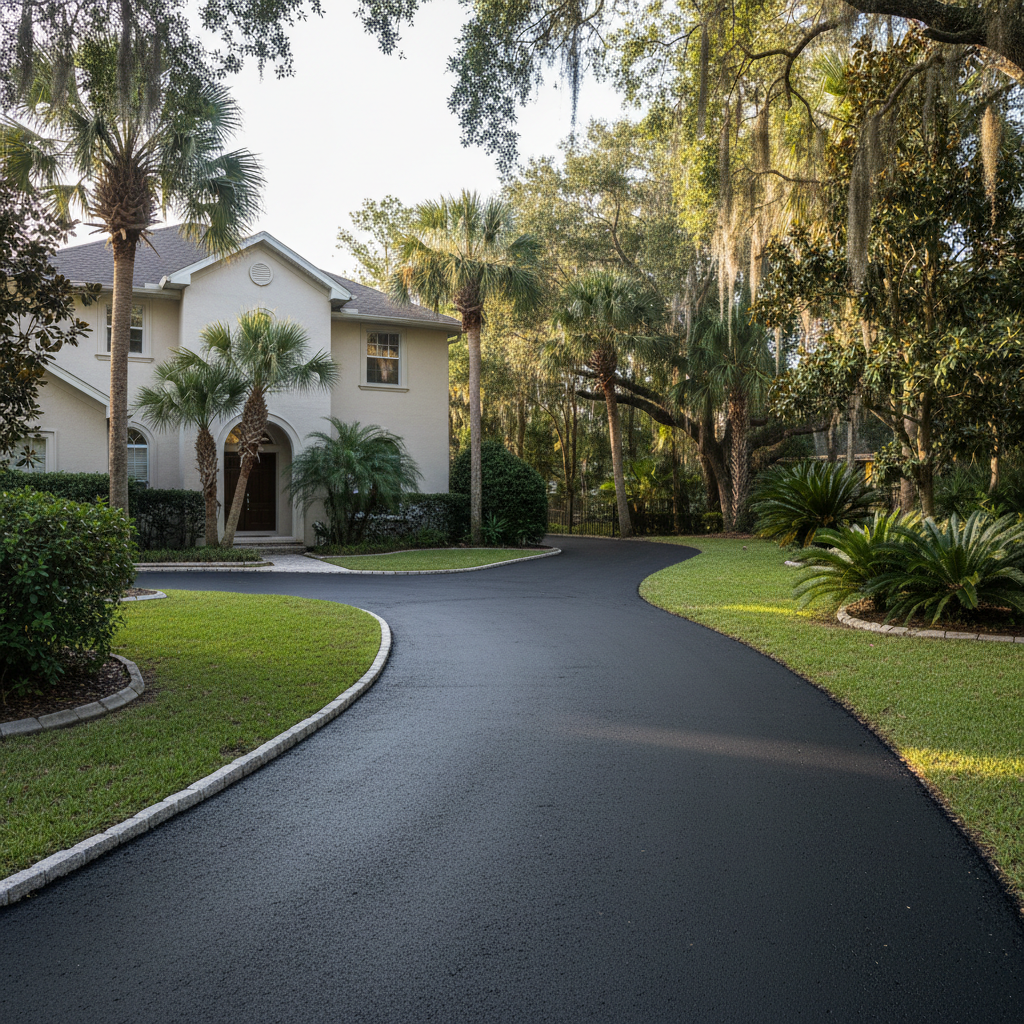
You've invested good money in your asphalt driveway, right? So, you want it to last. Down here in Jacksonville, our climate — that intense sun, heavy rains, and even tropical storms — really puts asphalt to the test. It's not like up north where they worry about freeze-thaw cycles; we've got our own unique challenges. But with a little attention, you can significantly extend the life of your driveway and keep it looking good.
Extending Your Driveway's Life in Florida
The biggest enemy of asphalt here isn't just traffic; it's the sun and water. UV rays bake the oils out of the asphalt, making it brittle. Water then seeps into those tiny cracks, and it's a downhill slide from there. Here's what I tell folks:
Sealcoating is your best friend. Think of it like sunscreen for your driveway. A good quality sealcoat every 2-3 years, depending on traffic and sun exposure, protects the asphalt from UV degradation and acts as a barrier against water. It also restores that nice, dark black color, which helps it absorb less heat.
Don't let standing water sit. If you've got low spots where water puddles after a rain, that's a problem. Water softens the asphalt base over time, leading to potholes. Sometimes it's a drainage issue around the driveway, sometimes it's a sign of a failing base. Either way, address it.
Mind your weight. Heavy vehicles, like RVs or construction equipment, can really stress residential asphalt that wasn't designed for that kind of load. If you're having a big delivery or a heavy vehicle needs to park, try to limit its time on the driveway or use temporary boards to distribute the weight.
Regular Maintenance You Can Do
You don't need to be an asphalt expert to keep an eye on things. A little proactive care goes a long way.
Keep it clean. Sweep off dirt, leaves, and debris regularly. Organic matter can hold moisture against the surface, and dirt can become abrasive. Plus, it just looks better.
Deal with spills immediately. Oil, gas, and other automotive fluids are petroleum-based, just like asphalt. They'll soften and dissolve your driveway if left to sit. Use an absorbent material like cat litter or sand, then clean the spot with a stiff brush and mild detergent.
Trim back vegetation. Tree roots can cause significant damage by growing underneath and lifting your asphalt. Keep an eye on landscaping near the edges of your driveway.
Warning Signs of Trouble
Catching problems early saves you money. Here's what to look for:
Small cracks. These are the first sign of trouble. They let water in. Don't ignore them. Hairline cracks can quickly become alligator cracking if left untreated.
Fading or graying. If your asphalt is looking dull and gray instead of black, it means the binder is oxidizing. This is when sealcoating becomes really important.
Potholes or depressions. These are past the warning sign stage; they're active problems. Potholes are dangerous and will only get bigger. Depressions mean the base is failing.
Alligator cracking. This pattern looks like alligator skin – a network of interconnected cracks. It usually indicates a base failure and means you're going to need more than just a patch.
Edge deterioration. The edges of your driveway can crumble if they're not properly supported or if heavy vehicles drive on them repeatedly. This is common in areas like Nocatee where driveways often meet unpaved shoulders.
When to Call a Professional
You can handle sweeping and cleaning, but some jobs are best left to us pros. Don't hesitate to call Neighborly Asphalt Solutions if you see any of these issues:
Extensive cracking or alligator cracking. Small cracks you might be able to fill with a DIY product, but widespread cracking needs professional assessment and repair. We've got the right materials and techniques to make those repairs last.
Potholes. While you can buy cold patch, a professional repair involves cleaning out the hole, properly compacting the base, and using hot asphalt that bonds much better and lasts longer.
Drainage problems. If water is consistently pooling on your driveway, it's not just an asphalt problem; it's a sub-base or grading issue. We can assess the underlying cause and recommend a lasting solution.
Sealcoating. This isn't a DIY job if you want it done right. Professional sealcoating ensures proper surface preparation, even application, and the use of high-quality materials that will actually protect your driveway for years.
Any signs of base failure. If your driveway is sinking, buckling, or has significant depressions, the problem is deeper than the surface. We can evaluate whether it needs an overlay or a full reconstruction.
Look, your driveway is a big part of your home's curb appeal and functionality. A little attention goes a long way in our Jacksonville climate. Don't wait until a small crack turns into a major repair. Give Neighborly Asphalt Solutions a call if you're unsure about anything you see on your asphalt. We're always happy to take a look.