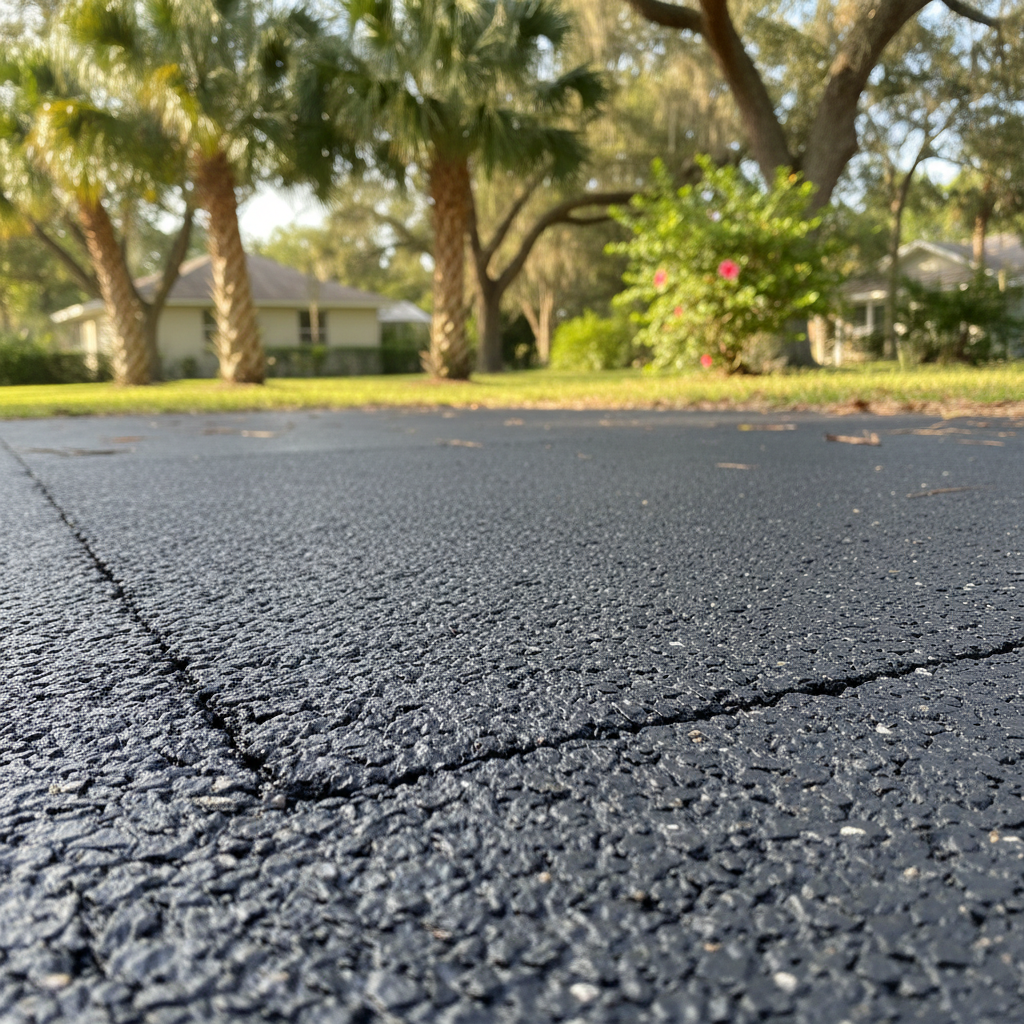
Alright, let's talk about fixing up your asphalt driveway. You've got cracks, maybe a pothole or two, and you're wondering if it's a weekend project or if you need to pick up the phone. I get it. As a contractor here in Jacksonville, I see folks try all sorts of things, and sometimes it works out, sometimes it doesn't. This isn't about selling you something; it's about giving you the straight scoop so you can make the right call for your home.
Before You Start: Assess the Damage
First things first, you gotta look at what you're dealing with. Not all asphalt problems are created equal. You've got hairline cracks, bigger alligator cracking, and actual potholes. Each one tells a different story about what's going on underneath.
- Hairline Cracks (less than 1/4 inch wide): These are usually just surface-level. They happen from sun exposure, minor shifting, or just the asphalt getting old. You can often tackle these yourself.
- Wider Cracks (1/4 inch to 1 inch): Now we're getting a bit deeper. Water can get into these, and that's when things start to get serious, especially with our heavy rains and the way the water table can fluctuate around here in areas like Mandarin or along the St. Johns River. If water gets under the asphalt and freezes (rare, but it happens) or just sits there, it'll erode the base.
- Alligator Cracking: This looks like a reptile's skin, a network of interconnected cracks. This is a big red flag. It means the base layer, the foundation of your driveway, is failing. This isn't a DIY job, not if you want it done right.
- Potholes: These are depressions where the asphalt has completely broken away. They start small but grow fast, especially with traffic and water. A small, shallow one might be DIY, but anything bigger or deeper usually needs professional attention.
The key here is understanding that asphalt isn't just a top layer; it's a system. If the problem is just on the surface, you might be able to handle it. If it's deeper, affecting the base, you're looking at a bigger repair, and that's where you'll save money and headaches by calling someone like us at Neighborly Asphalt Solutions.
Your DIY Toolkit: What You Can Realistically Do
For those smaller, surface-level issues, you can absolutely do some good work yourself. Here's what you'll need and what to do:
- Crack Filler: For those hairline cracks, a good quality pourable or squeeze-tube crack filler works wonders. Make sure the crack is clean and dry. Use a wire brush to get out any loose debris, then blow it out with an air compressor or even a leaf blower. Follow the product instructions, but generally, you'll just fill the crack slightly proud of the surface, and it'll settle.
- Cold Patch for Small Potholes: If you've got a small, shallow pothole (think frisbee-sized and not too deep), cold patch asphalt can be a temporary fix. You'll need to clean out the pothole thoroughly – no loose bits, no standing water. Square off the edges with a pickaxe or shovel if you can, to give it a better bond. Dump in the cold patch, then compact it down. You can use a hand tamper, a heavy piece of wood, or even drive your car over it a few times. It won't be perfect, but it'll prevent further damage for a while.
Remember, these DIY fixes are often temporary. They're about extending the life of your driveway and preventing small problems from becoming huge ones. They're not a permanent solution for major structural issues.
When to Call a Professional: Don't Be a Hero
Look, I'm all for homeowners tackling projects, but there's a point where it just doesn't make sense to do it yourself. Here's when you should absolutely call in a pro:
- Alligator Cracking: As I said, this means your base is shot. We're talking about removing the old asphalt, re-grading and compacting the sub-base, and then laying new asphalt. That's heavy equipment, specific materials, and expertise you probably don't have in your garage.
- Large or Deep Potholes: If a pothole is bigger than a dinner plate or deeper than a couple of inches, cold patch isn't going to cut it for long. We'll likely need to cut out the damaged section, repair the base, and then hot-patch it, which creates a much more durable, seamless repair.
- Multiple, Widespread Issues: If your driveway looks like a patchwork quilt of cracks and small repairs, you're probably better off with an overlay or even a full replacement. Trying to fix every little bit yourself will cost you more in materials and time than just getting a professional to do a comprehensive repair.
- Drainage Problems: If you notice water pooling consistently on your driveway, that's a drainage issue. Repairing the asphalt won't fix the underlying problem. A professional can assess the grade and suggest solutions, whether it's re-sloping, adding drainage, or a more extensive repair that addresses the water flow.
- Anytime You Feel Overwhelmed: Seriously. If you're not confident, or if the project seems too big, just call us. We've got the tools, the crew, and the experience to get it done efficiently and correctly. You'll avoid frustration, wasted money on materials, and potentially making the problem worse.
After the Repair: Keep an Eye On It
Whether you do it yourself or hire us, don't just forget about your driveway. Keep an eye on the repaired areas. If you did a DIY crack fill, check it after a few weeks, especially after a good rain. Did it hold? Is water still getting in? For cold patches, watch for signs of breakdown or sinking. Regular inspections, maybe once every few months, can catch new issues before they become big headaches.
Ultimately, a well-maintained asphalt driveway adds curb appeal and value to your home. Knowing when to roll up your sleeves and when to call in the cavalry is key to keeping it looking good and performing well for years to come.