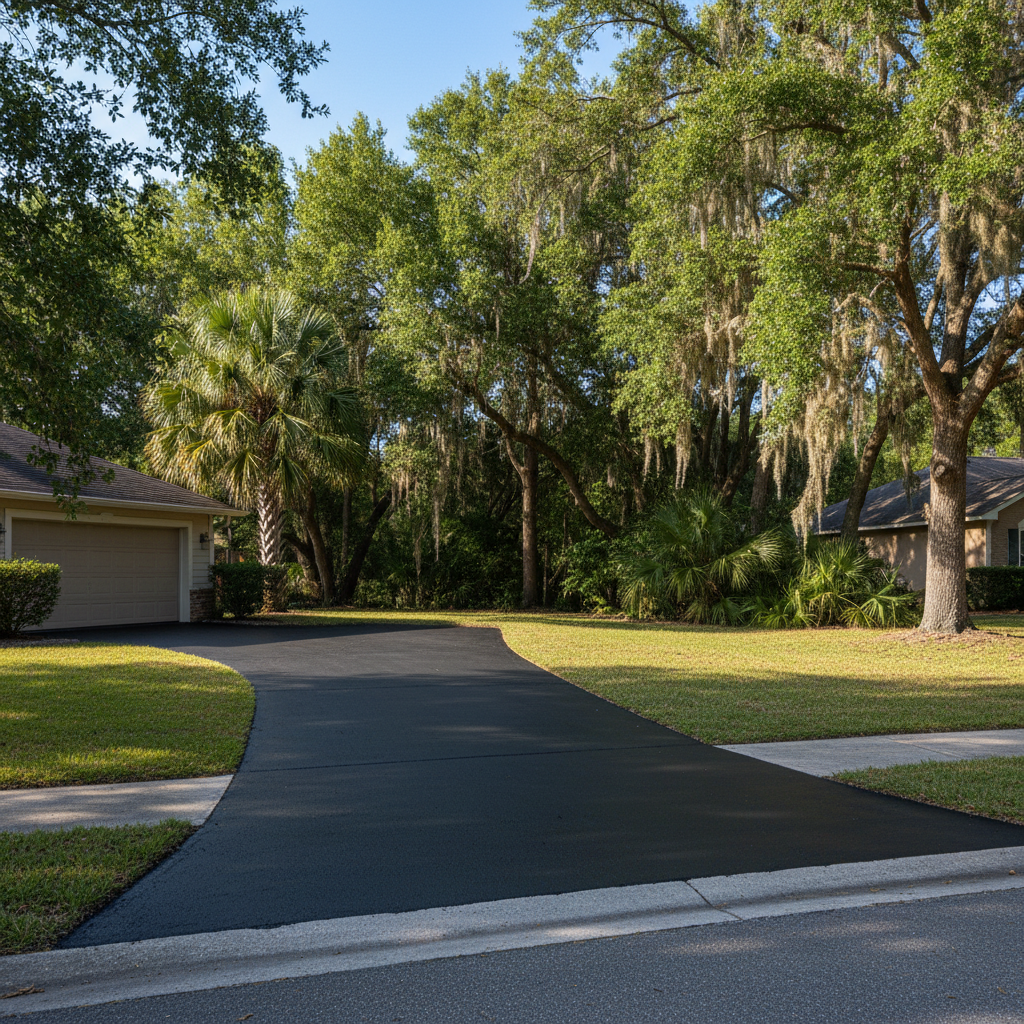
Alright, let's talk slurry coating. It's a great way to protect and extend the life of your asphalt driveway, especially here in Jacksonville where the sun and rain can really beat down on things. But I've seen too many homeowners make some pretty common mistakes that end up costing them more time, money, and frustration than they ever needed. I'm here to help you avoid that.
Mistake #1: Not Understanding What Slurry Coating Is (and Isn't)
A lot of folks think slurry coating is a magic bullet that'll fix all their driveway problems. It's not. Slurry seal is a protective layer, a mix of asphalt emulsion, aggregate (tiny rocks), and fillers. It's designed to seal small cracks, improve skid resistance, and give your driveway a fresh, uniform look. What it doesn't do is fix major structural issues, deep potholes, or significant cracking. If you've got those problems, you need repairs first. Trying to slurry coat over a failing driveway is like putting a fresh coat of paint on a rotting fence – it looks good for a minute, but the underlying problem is still there and will pop through quickly. We always tell our clients at Neighborly Asphalt Solutions that proper prep is key. If a contractor tries to sell you on slurry coating without mentioning any necessary repairs first, that's a red flag.
Mistake #2: Hiring the Cheapest Bid Without Asking Questions
I get it, everyone wants a good deal. But when it comes to asphalt work, the cheapest bid is often the most expensive in the long run. Here's why:
- Materials Matter: Some contractors cut corners by using lower-quality materials or skimping on the mix ratio. A proper slurry mix has specific proportions of emulsion, aggregate, and water. Too much water, not enough aggregate, or cheap emulsion, and your coating won't last. It'll wear off fast, crack, or even track onto your shoes.
- Experience Counts: Slurry application isn't just spraying stuff down. It requires skill to get an even, consistent layer. An inexperienced crew can leave streaks, uneven patches, or apply it too thick or too thin. Too thick, and it might not cure properly; too thin, and it won't offer much protection.
- No Insurance/License: This is a big one. If a contractor isn't properly licensed and insured in Florida, you're taking a huge risk. If someone gets hurt on your property or they damage something, you could be on the hook. Always ask for proof of insurance and their license number.
Don't just compare prices. Compare what you're actually getting for that price. Ask about their materials, their process, and their experience.
Mistake #3: Ignoring the Weather Forecast
This might seem obvious, but you'd be surprised. Slurry coating needs specific conditions to cure properly. Here in Jacksonville, we get our fair share of hot, humid days and sudden afternoon downpours. Applying slurry on a day that's too cold, too hot, or with rain on the horizon is a recipe for disaster. The material won't bond right, it might not cure evenly, or it could wash away before it sets. A good contractor will schedule your job for optimal weather conditions, usually when temperatures are consistently above 50°F and no rain is expected for at least 24-48 hours after application. If a contractor is pushing to get the job done despite iffy weather, be wary.
Mistake #4: Not Preparing Your Driveway Properly (or letting the contractor skip it)
Even if you're hiring someone, you need to understand the prep work involved. A clean surface is crucial for the slurry to adhere properly. This means:
- Cleaning: Your driveway needs to be swept clean of loose debris, dirt, and leaves. Power washing is often part of this.
- Weed Removal: Any weeds growing through cracks need to be removed, not just cut down.
- Oil Stains: Oil and grease spots need to be treated and removed, as they can prevent proper adhesion.
- Crack Filling: Larger cracks (usually anything over a quarter-inch) need to be filled and allowed to cure before slurry is applied.
If a contractor just shows up and starts spraying without any of this crucial prep work, you're going to have problems. The slurry won't stick, and you'll see it peeling or flaking off much sooner than it should. It's like painting a wall without cleaning it first – the paint just won't hold up.
Mistake #5: Not Asking About Curing Time and Future Maintenance
Once your slurry coating is down, it's not immediately ready for traffic. It needs time to cure. This usually means staying off it for at least 24-48 hours, sometimes longer depending on the weather and specific product used. Driving on it too soon can leave tire marks, scuff the new surface, or even damage the coating. A reputable contractor will give you clear instructions on curing time and when you can safely use your driveway again. They should also give you advice on how to maintain your new surface, like regular cleaning and when you might need to consider reapplying in the future. For most residential driveways here in neighborhoods like Mandarin or the Beaches, a good slurry job can last several years with proper care.
Look, a slurry coating project doesn't have to be a headache. By avoiding these common mistakes – understanding the product, vetting your contractor, paying attention to the weather, ensuring proper prep, and respecting the cure time – you'll end up with a protected, great-looking driveway that lasts. Don't be afraid to ask questions. It's your property, and you deserve a quality job.