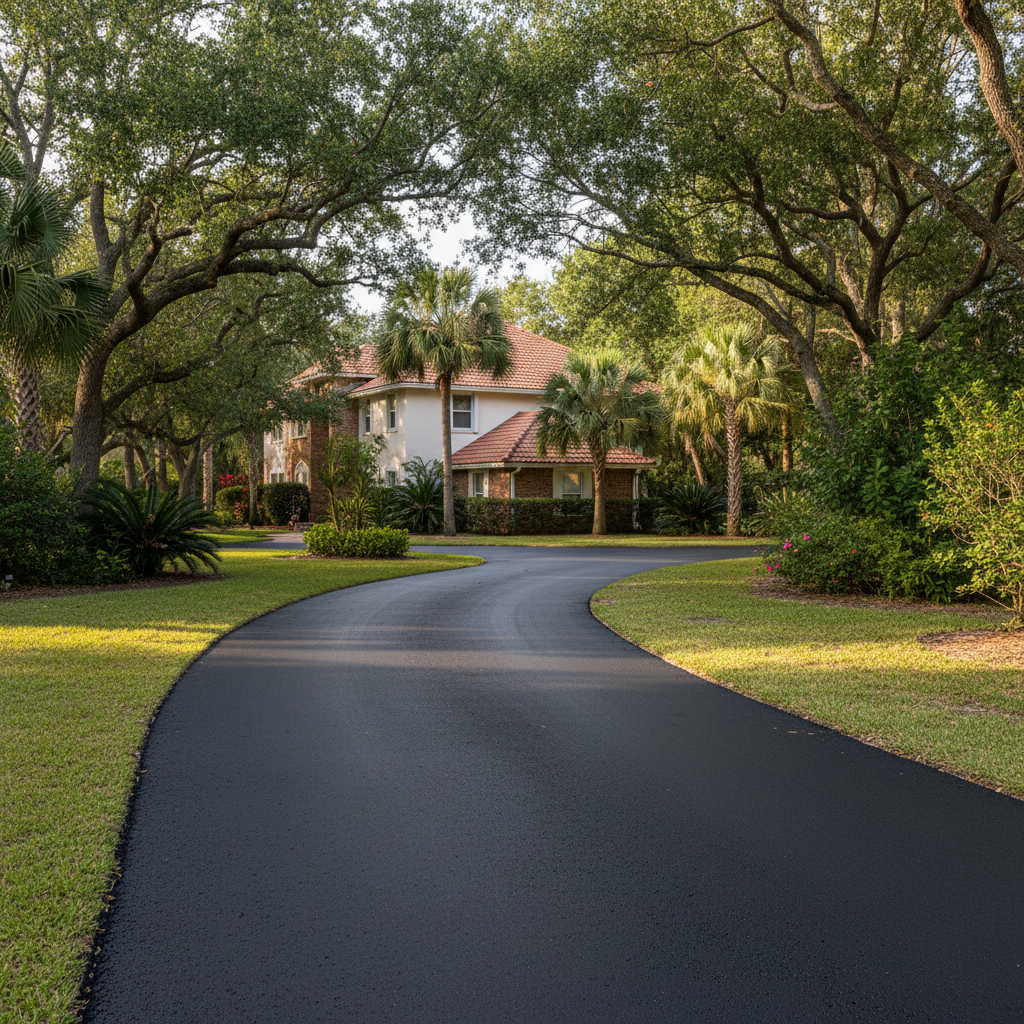
Have you ever wondered why your asphalt driveway seems to get old faster than you expect here in Jacksonville? It is not just something you are imagining. Our Florida climate is unique. It has a scorching sun as well as heavy rains as well as salt air near the beaches. This climate puts a real strain on pavement. You do not need to worry too much about it. With some know-how and regular attention, you can make your residential asphalt last a lot longer.
Extend Your Asphalt's Life: The Florida Way
Asphalt is tough. It is not invincible, though. This is especially true against our intense UV rays as well as our daily afternoon downpours. You can think of it like your skin. You would not go out in the Florida sun without sunscreen. Your driveway needs protection too.
- Sealcoating is Your Sunscreen and Raincoat: This is probably the most important thing you can do for your asphalt. Sealcoating works as a protective barrier against UV damage as well as water penetration as well as oil drips. It keeps the asphalt from drying out as well as becoming brittle as well as cracking. For us in Jacksonville, you are generally looking at sealcoating every 2 to 3 years. Some spots, like those always in direct sun or with heavier traffic, might need it a bit more often.
- Deal with Cracks Right Away: Small cracks are like tiny invitations for water to get in. Once water gets under your asphalt, especially with our sandy soil, it can really mess things up. It weakens the base and leads to bigger problems like potholes. You should fill those cracks as soon as you see them. It is a simple fix that saves you a lot of headache as well as money later on.
- Mind Your Drainage: This is very important in Florida. With our heavy rains, poor drainage is a major asphalt killer. If water sits on your driveway, it is going to seep in and erode the sub-base. You need to make sure your driveway has a good slope to direct water away. Contractors usually aim for a 1-2% grade. You should also keep those gutters and downspouts clear. If you have pooling water, especially in areas like Mandarin where clay-heavy soil can be an issue, you might need to look into drainage solutions. These solutions include French drains.
- Keep it Clean: This is simple. Sweeping away leaves as well as dirt as well as debris regularly prevents them from breaking down. This also prevents them from causing stains or weakening the surface. If you spill oil or gas, clean it up quickly. Those fluids can soften as well as damage the asphalt binder.
What Regular Maintenance Looks Like
You can think of this as a seasonal check-up for your driveway. You do not need to be out there every day. Consistent, proactive care makes a difference for your asphalt in Jacksonville.
- Monthly: A quick sweep or leaf-blower pass is good. You should check for any new stains or debris.
- Every Few Months: Give your driveway a good wash. A pressure washer on a low setting can work. A good scrub with a stiff broom and some mild detergent is often enough. Look closely for any new cracks forming.
- Annually: This is your big inspection. Walk your entire driveway. Look for cracks as well as soft spots as well as areas where water might be pooling. If you find cracks, get them filled. If your sealcoat is looking faded or worn, start planning for its reapplication.
- Every 2-3 Years: Schedule that professional sealcoating. It is an investment that pays off by delaying more expensive repairs for your residential asphalt.
Warning Signs of Trouble
Your driveway will usually tell you when something is wrong. You just need to know what to listen for or what to look at.
- Fading to Gray: Asphalt should be dark black. If it is turning gray, that is a sign of oxidation. This means the sun's UV rays are breaking down the binder and making it brittle. It is losing its protective oils.
- Hairline Cracks Everywhere: Small cracks are normal as asphalt gets older. If you see a network of fine cracks, often called 'alligator cracking,' it means the base layer is failing. This is a serious sign for your asphalt driveway.
- Loose Gravel (Raveling): If you are seeing small stones coming loose from the surface, that is raveling. It means the binder is not holding the aggregate together anymore. This is often due to UV exposure and oxidation.
- Soft Spots or Rutting: If your asphalt feels soft or you see tire impressions or ruts, especially after a hot day, it means the material is softening. This happens under the heat and traffic. This can be a sign of a weak mix or a weak base.
- Puddles That Will Not Go Away: Standing water is a huge problem. If your driveway is not draining properly, that water is going to find its way into your asphalt. It will cause damage.
- Lifted Areas Near Trees: Tree roots are known for pushing up asphalt as they grow. If you see bumps or cracks radiating from nearby trees, those roots are likely the problem.
When to Call a Professional
Some things you can handle yourself. For other things, you really need to bring in the pros. That is where Neighborly Asphalt Solutions in Jacksonville comes in.
- Extensive Cracking or Alligator Cracking: If you have more than just a few small cracks, or if you see that alligator pattern, it is time to call us. This usually means there is a base issue that needs professional assessment as well as repair.
- Potholes: You can patch small potholes yourself. Larger ones or recurring potholes often point to underlying problems with the base or drainage. A professional needs to address these issues.
- Drainage Problems: If you have persistent standing water, especially after heavy rains, you need an expert to evaluate your grading as well as your drainage. We can suggest solutions like regrading as well as installing proper drainage systems. This will protect your investment.
- Significant Fading or Raveling: If your driveway is graying out or losing its aggregate, it is a sign that the protective qualities are gone. It is vulnerable. A professional sealcoating or even resurfacing might be needed for your residential asphalt.
- Tree Root Damage: Dealing with tree roots requires careful planning. This is to protect both your driveway and the tree. You might need root barriers or precise root pruning. This is a job for an arborist or a paving professional. They understand how to fix this specific issue.
- Anytime You Are Unsure: If you are looking at your driveway and just have a bad feeling, or you are not sure what a particular problem means, give us a call. It is always better to catch issues early. This is better than waiting until they become major, costly repairs.
Your asphalt driveway is a big part of your home's curb appeal as well as its functionality. With our Florida weather, it needs a little extra care. You should stay proactive with maintenance. Keep an eye out for those warning signs. Do not hesitate to reach out to Neighborly Asphalt Solutions when you need a professional hand. We are here to help you keep your pavement in top shape in Jacksonville.