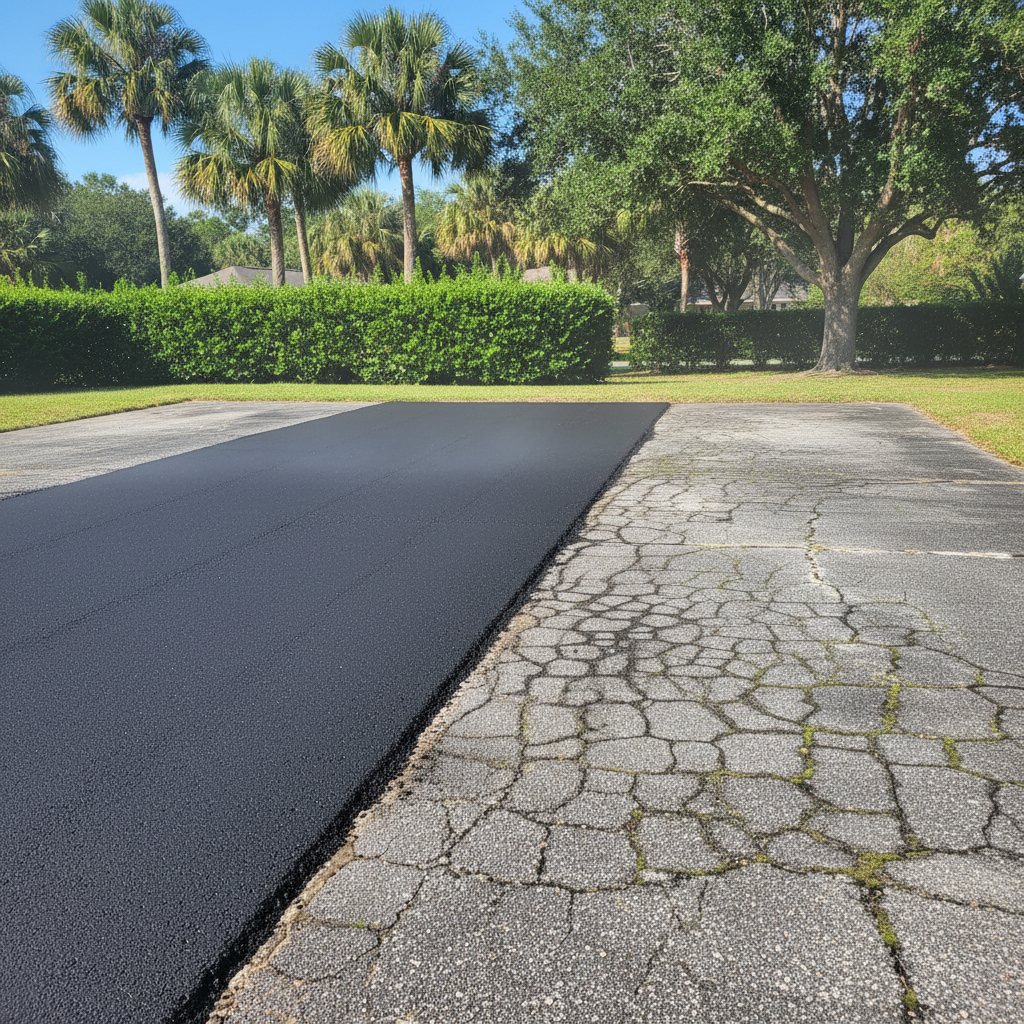
Alright, let's talk about those ugly cracks and potholes popping up on your asphalt driveway. It's a common sight, especially with our Florida sun and heavy rains. When it comes to fixing them, homeowners often ask me about two main approaches: a full cut-and-replace patch, or just throwing an asphalt overlay on top. They both sound like they do the same thing, right? Not exactly. Let's break down what you're really getting with each.
The Quick Fix: Asphalt Overlay Patching
An overlay patch is exactly what it sounds like. We're talking about cleaning out the loose stuff from a pothole or crack, maybe putting down a tack coat, and then filling it with new asphalt. Sometimes, for larger areas, it might involve milling down a few inches of the old asphalt first, then laying a new layer over the entire damaged section. It's quicker, generally less disruptive, and usually cheaper upfront.
Now, for a small, shallow pothole or a single crack that hasn't spread too far, an overlay can be a decent short-term solution. It'll make your driveway look better for a while, and it'll stop water from getting into that specific spot right away. It's like putting a band-aid on a cut. It covers it up, and it helps it heal, but it doesn't fix what caused the cut in the first place.
Here's the rub, especially in Jacksonville. Our soil here, often sandy and prone to shifting with heavy rains and fluctuating water tables, means that the underlying issues causing those cracks usually aren't going away. An overlay doesn't address the structural integrity underneath. If your base is failing, or you've got significant sub-grade issues, that new patch is just sitting on top of a weak foundation. You'll see those cracks 'reflect' through the new asphalt pretty quickly, sometimes within a year or two. It's a cosmetic fix more than a structural one.
The Long-Term Solution: Cut-and-Replace Patching
This is the more robust approach, and it's what I recommend for most significant damage. With a cut-and-replace patch, we're not just covering up the problem. We're getting rid of it. We'll cut out the entire damaged section of asphalt, usually in a neat square or rectangle. Then, we excavate the old, failing asphalt and often some of the sub-base material underneath. This is crucial. We inspect the sub-base, compact it thoroughly, and if needed, add new aggregate to build a stronger foundation.
Once the base is solid, we apply a tack coat and then lay down fresh, hot asphalt. We compact it properly, making sure it's level with the surrounding pavement. This method creates a patch that's essentially a brand-new section of your driveway, with a solid foundation from the ground up.
It's more labor-intensive, takes a bit longer, and yes, it's going to cost more upfront than a simple overlay. But you're paying for durability. You're paying for a repair that's designed to last for years, not just months. We've seen countless driveways in areas like Mandarin or the Beaches where a proper cut-and-replace patch has held up beautifully for a decade or more, even with our intense summer downpours and constant sun exposure.
Cost, Durability, Maintenance, and Appearance
- Cost: Overlay is cheaper initially. Cut-and-replace is more expensive upfront.
- Durability: Overlay is short-term, prone to reflective cracking. Cut-and-replace is long-term, addressing the root cause.
- Maintenance: Overlays often require re-patching sooner. Cut-and-replace patches are low maintenance once done right.
- Appearance: Both can look good immediately. Overlays tend to show signs of failure (cracks reappearing) much faster, making the overall driveway look worse sooner. A well-done cut-and-replace blends in better and stays looking good longer.
My Recommendation for Jacksonville Homeowners
Look, I'm not going to tell you an overlay is never the right choice. If you're selling your house next month and just need to make the driveway presentable, or if it's a very minor, isolated surface crack, an overlay might get you by. But if you're planning to stay in your home for years, and you want a repair that actually lasts and protects your investment, you really need to go with a cut-and-replace patch.
Especially with our climate here in Northeast Florida – the heat, the rain, the sandy soil – you need a repair that can stand up to it. A cheap fix often ends up costing you more in the long run because you're paying to fix the same problem over and over. You want a repair that addresses the underlying issue, not just the symptom.
At Neighborly Asphalt Solutions, we always recommend the solution that gives you the best value and longevity. We'll come out, take a look at your driveway, and give you an honest assessment of what's going on and what kind of patch will actually solve your problem, not just cover it up. Don't throw good money after bad. Invest in a proper repair, and your driveway will thank you for it.