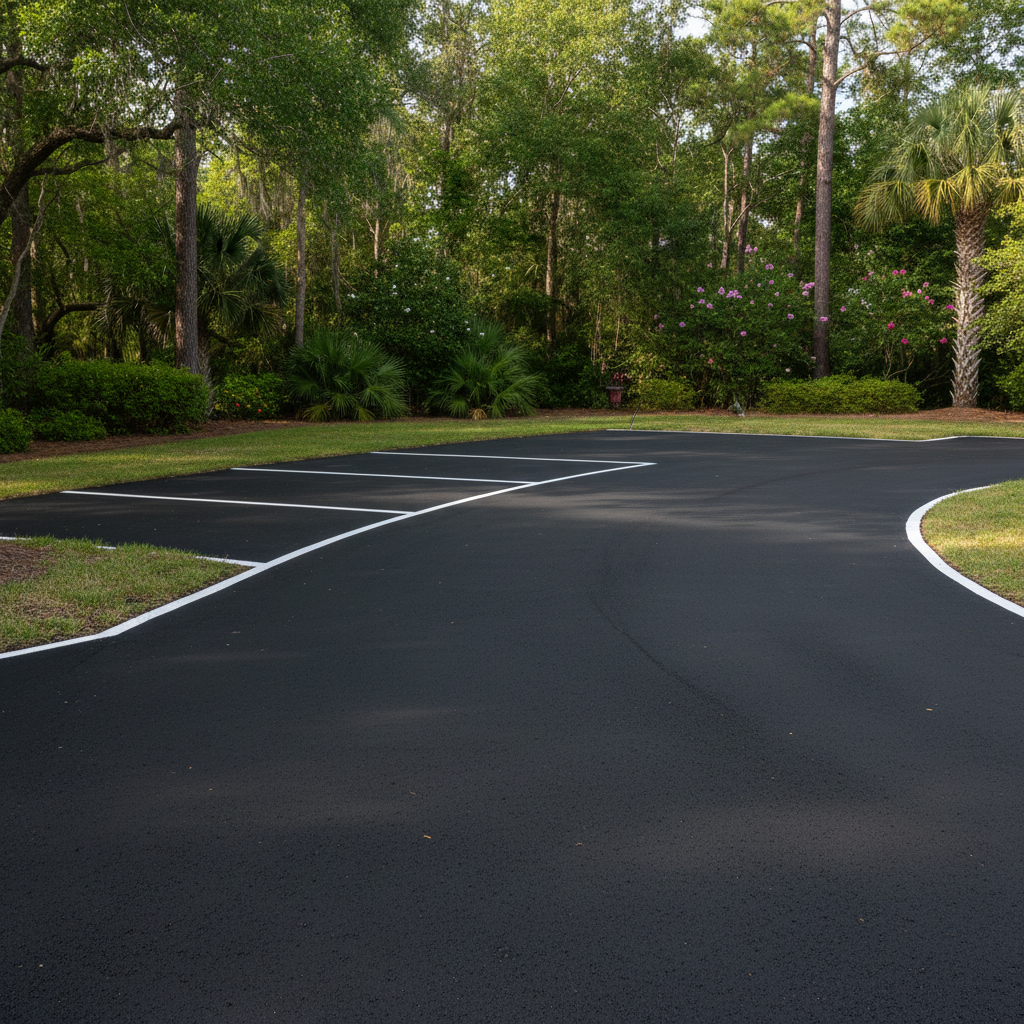
So, you've got an asphalt driveway. Maybe it's brand new, or maybe you just had it sealcoated, and now you're thinking about adding some striping. You might want to mark out parking spots, or maybe you just want it to look cleaner and more finished. That's a really good idea, but I've seen folks around Jacksonville make some pretty common blunders that end up costing them more in the long run. Let's talk about what to steer clear of.
Mistake #1: Not Getting the Surface Ready
This one's probably the biggest. You can't just slap paint on asphalt that's dirty, dusty, or even a little damp and expect it to hold up. The surface really needs to be clean and dry. I'm talking about sweeping off every bit of loose junk, maybe even power washing it if there's a lot of crud, and then letting it dry completely. Here in Jacksonville, with all our humidity, "completely dry" can take way longer than you'd think, especially after a good rain. If you skip this step, the paint won't stick, and you'll see it peeling or flaking off in no time. Then you're right back where you started, or worse, you've got a splotchy mess to clean up.
Mistake #2: Grabbing the Wrong Kind of Paint
Believe it or not, paint isn't all the same, especially when it comes to asphalt. You can't just pick up any old exterior paint from the hardware store and expect it to handle car traffic, harsh UV rays, and our Florida heat. You need a special traffic paint or asphalt striping paint. These paints are made to be tough, keep their color, and stand up to wear and tear. They're usually acrylic-based and dry fast, which is super important for not shutting down your driveway all day. Using the wrong paint? That's like trying to hammer a nail with a screwdriver – it might work for a second, but it won't last, and you'll probably mess something up.
Mistake #3: Just Guessing on Measurements and Layout
Unless you're a wizard at eyeballing perfectly straight lines and even spacing, don't just wing it. A crooked line or parking spaces that aren't consistent look pretty amateurish, and they can actually make your property look worse. Before any paint touches the ground, you absolutely need to measure everything out and mark it. Use chalk lines, string, or even a tape measure and a pencil to plan your design. Think about how cars will actually use the space. If you're marking parking spots, make sure they're wide enough for today's bigger vehicles. We see a lot of older driveways in places like San Marco or Avondale that just weren't built for modern cars, so good planning is crucial.
Mistake #4: Ignoring What the Weather's Doing
Jacksonville weather can be a real pain. One minute it's sunny, the next there's a sudden pop-up shower. You obviously can't stripe asphalt in the rain, but you also shouldn't do it when it's too cold or too hot. Most traffic paints have an ideal temperature range for putting them down, usually somewhere above 50°F and below 90°F. If it's too cold, the paint won't set right. If it's too hot, it can dry too fast, leading to poor adhesion or cracks. Humidity also messes with how long things take to dry. Always check the forecast and the paint manufacturer's advice before you even think about starting.
Mistake #5: Not Calling a Pro for Bigger Jobs
For a small, simple line or two, maybe you can tackle it yourself. But if you've got a larger driveway, lots of parking spots, or want something more involved like directional arrows or handicapped symbols, you're probably better off bringing in the experts. We've got the right gear – commercial-grade striping machines, stencils, and plenty of experience – to get the job done quickly and correctly. A professional, like Neighborly Asphalt Solutions, knows the best paints to use, exactly how to prep the surface, and how to lay out a design that's both useful and looks good. We also know how to deal with those inevitable Jacksonville afternoon thunderstorms that can totally ruin a fresh striping job if you're not careful.
Mistake #6: Forgetting About How Long It Takes to Cure
Just because the paint looks dry on top doesn't mean it's fully cured. Most traffic paints are "tack-free" pretty quickly, meaning you can walk on them, but they need more time to really harden and stand up to cars driving over them. Driving on freshly striped asphalt too soon can leave tire marks, smudges, or even pull up the paint. Always check the product's instructions for how long it needs to cure before letting vehicles back on the surface. Seriously, patience pays off here.
Getting your asphalt striping done right isn't brain surgery, but it does mean paying attention to the details and using the right stuff and methods. Skip these common mistakes, and you'll end up with a sharp-looking, tough result that makes your property look great for years to come.